

Why Cabinet Hardware Is Worth Spending Time On
Cabinet hardware is easy to leave until the end of a kitchen remodel. Compared with cabinetry, countertops, and flooring, a knob or pull may seem like a minor decision. Once repeated across an entire kitchen, however, hardware has a noticeable effect.
That repetition gives hardware more visual influence than its size might suggest. It can make a kitchen feel traditional, contemporary, casual, or refined. It also affects how comfortable the cabinetry is to use every day.
The right hardware helps the kitchen look complete and feel good to use.
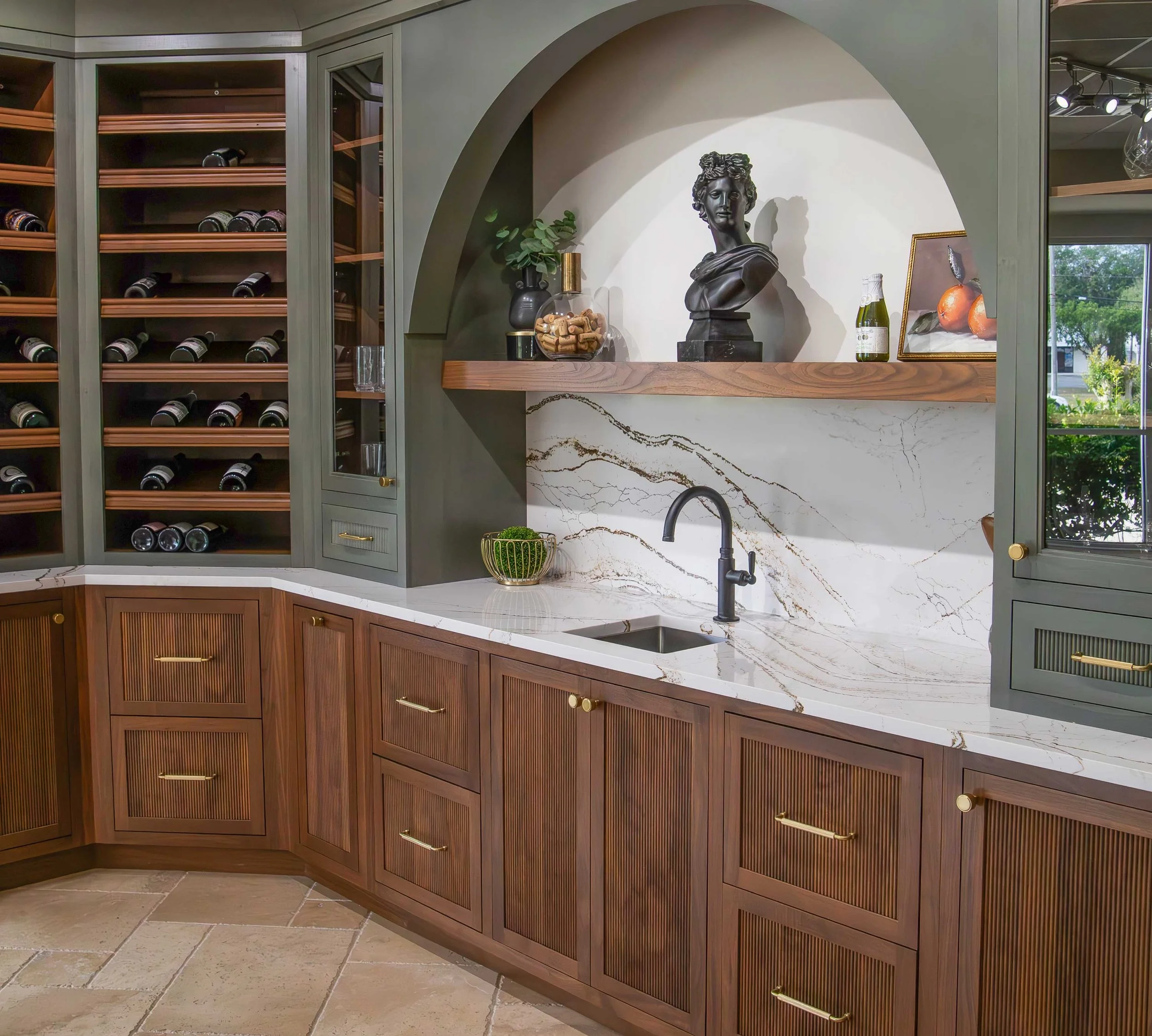
Hardware Helps Define the Style
The same cabinet door can take on a different personality depending on the hardware paired with it. A simple Shaker-style cabinet with a streamlined bar pull can feel clean and current. Add a more detailed knob or curved pull, and the same door may lean more traditional.
Hardware can strengthen the direction of the overall design or create a subtle contrast. Long, minimal pulls complement slab-front cabinets and emphasize their modern lines. Cup pulls can add character to drawers in a relaxed or classic kitchen. Knobs provide a smaller visual accent and can be paired with pulls to create variation.
A transitional kitchen may combine classic cabinetry with simpler hardware, while clean black or brushed metal pulls can give warm wood cabinetry a more contemporary feel. The goal is to support the look you want without competing with other features.
Finish Changes the Mood
Hardware finish affects both contrast and warmth. Matte black creates a strong outline, especially against white or light-painted cabinetry. Polished chrome can feel bright and crisp, while brushed nickel often reads softer and more understated. Brass and gold-toned finishes introduce warmth and can act like jewelry against painted or stained cabinets.
The cabinet color matters, too. A dark finish can stand out on a pale door but appear quieter on deep blue, green, or black cabinetry. Warm metals may bring out golden notes in natural wood, while cooler finishes can reinforce gray or blue undertones.
Hardware does not always need to match every metal exactly. When mixing finishes, repeat each one intentionally so the combination feels connected.
Size and Proportion Matter
A pull that looks substantial on a sample board may seem small once it is installed on a wide drawer. A long pull that works beautifully on an island drawer may overwhelm a narrow cabinet door.
Some homeowners use one pull length throughout for consistency. Others choose longer pulls for wide drawers and smaller hardware for standard doors. Both approaches can work when the proportions are considered across the full design.
Before making a final choice, look at the hardware against the actual cabinet door rather than viewing it by itself. A designer can help you compare the width, projection, and placement so the selection feels balanced throughout the kitchen.
The Right Hardware Feels Good to Use
Cabinet hardware is not only decorative. It is something you will touch throughout the day, so comfort and function deserve just as much attention as appearance.
Consider whether a pull provides enough space for your hand and whether its edges feel comfortable. Check how far it projects from the cabinet. Very small knobs may be harder for some people to grip, while pulls can offer a larger contact area. Hardware with extended ends can occasionally catch loose clothing, so it is worth testing the shape before committing to it throughout the room.
Placement also affects ease of use. Consistent positioning creates a polished appearance, but the location should still feel natural when opening doors and drawers. Thoughtful planning is especially helpful around corners, appliance panels, and cabinets installed close to walls.
Small Details Add Up Across the Kitchen
A single hardware sample is relatively small. Multiply it across a kitchen with dozens of doors and drawers, and the visual effect becomes much more significant. That is why a finish that seems bold in your hand may feel balanced once it is repeated, while a detail you barely notice on one sample can become prominent across the entire room.
Hardware can also bring different parts of the design together. Its shape can echo a faucet or light fixture, while its finish can repeat a warm or cool accent used elsewhere.
Make the Choice With the Full Design in Mind
It is tempting to select hardware from an isolated online photo, but the best choice depends on the complete kitchen. Cabinet color, door style, countertop pattern, backsplash, lighting, appliances, and nearby finishes all affect how hardware will look.
Gathering samples allows you to see how finishes respond to the actual light in your home. It also gives you a chance to hold each piece, test its grip, and view it against the cabinet finish. If possible, compare a few options rather than choosing the first one that seems close.
Hardware may be one of the final layers added to a kitchen, but it should not feel like an afterthought. Giving it careful attention can help the entire design feel more intentional, comfortable, and complete.
Find the Details That Bring Your Kitchen Together
Our designers can help you coordinate cabinets, countertops, flooring, and the finishing details that shape your kitchen. Visit the Woodsman Kitchens & Floors showroom at 11732 Beach Boulevard in Jacksonville to explore your options and start creating a space made for how you live.